The One Question Everyone Asks About a Horse—But Rarely Answers Honestly
Every buyer asks it. Most sellers avoid it. “Why is this horse for sale?” isn’t gossip—it’s context. And when we stop dodging the answer, horses land in better homes.
By Neighh Team ·
If you’ve ever bought, sold, or even scrolled horse listings, you know the question.
It shows up in comments.
It’s whispered at the ingate.
It gets DM’d instead of asked publicly.
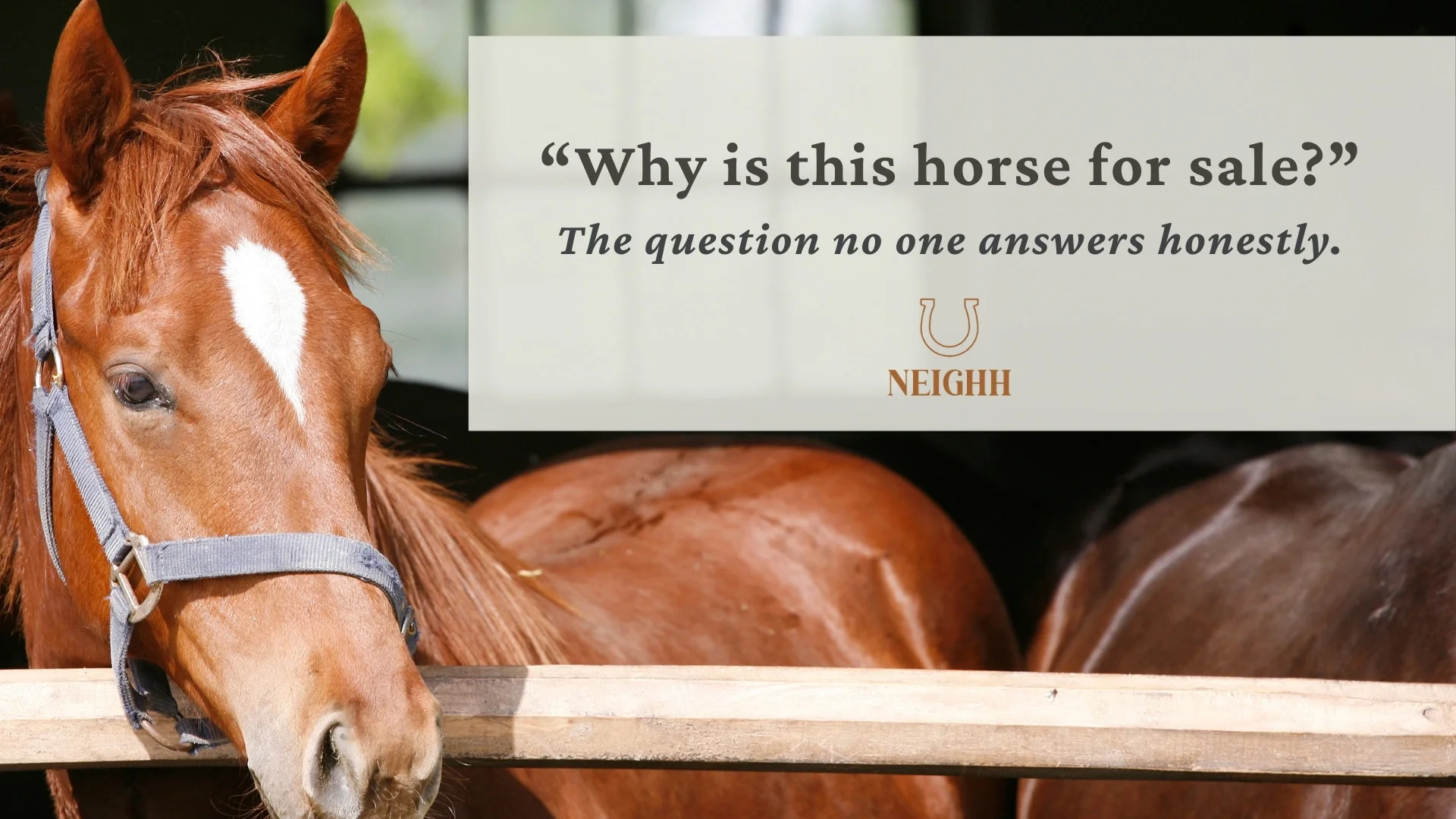
“Why is this horse for sale?”
And despite being the most important piece of context, it’s often the least clearly answered.
At Neighh, we think it’s time to stop treating this question like a trap—and start treating it like what it really is: information that leads to better matches and safer outcomes for horses.
Why This Question Feels So Loaded
In the horse world, “for sale” has quietly come to imply:
Something went wrong
Someone is hiding something
There’s a problem you’ll find out about later
Those fears aren’t imagined. Many riders have lived them.
So sellers stay vague.
Buyers grow suspicious.
And everyone dances around the truth.
But here’s the reality:
A horse being for sale isn’t the red flag.
A lack of clarity is.
The Many Completely Valid Reasons Horses Are Sold
Let’s normalize reality. Horses are sold every day because:
A rider outgrew the horse (skill, size, goals)
The program or discipline changed
Life circumstances shifted (time, finances, family)
The horse wants a different job
The horse has talent that isn’t being fully used
It’s simply not the right partnership
None of these make a horse “less than.”
They make the horse humanely managed.
What Buyers Are Actually Asking
When buyers ask why, they’re not fishing for gossip.
They’re asking for alignment.
They want to know:
Is this horse right for my goals?
Has this horse been rushed or mismanaged?
Am I walking into pressure I can’t see yet?
Clear context builds confidence.
Confidence creates better matches.
Better matches protect horses.
What Transparency Looks Like (Without Oversharing)
You don’t need a novel.
You don’t need drama.
You do need honesty.
Effective listings often include simple language like:
“Offered for sale as the rider is moving up and no longer has the time to develop him further.”
“Owner’s circumstances have changed, and this horse deserves a consistent program.”
“Best suited for a confident rider; offered to find the right long-term home.”
These statements don’t scare off the right buyers. They filter out the wrong ones.
Why This Matters More Than Ever
Today’s buyers are:
More educated
More cautious
More vocal
Less tolerant of surprises
Social media has changed the market.
Costs have changed ownership.
Horse welfare expectations are higher than ever.
The old “say as little as possible” approach doesn’t work anymore.
The Neighh Perspective
At Neighh, we believe:
Horses deserve clarity, not spin
Buyers deserve context, not confusion
Sellers deserve tools that help them tell the truth well
Transparency doesn’t hurt good sellers.
It elevates them.
And it leads to what we all want:
better matches, fewer heartbreaks, and horses that land where they truly belong.
Let’s Talk
Have you ever:
Bought a horse and later learned why it was really sold?
Sold a horse and struggled with how much to share?
Walked away from a sale because something felt off—but you couldn’t name it?
This conversation matters.
Because the best horse sales don’t start with a price.
They start with trust.
— Neighh
Raising the standard for buying and selling horses 🐎
Tags: horse sales, buying horses, selling horses, equestrian transparency, horse listings, hunter jumper, thoroughbred, equine welfare, Neighh